Danish Regulatory Shifts and Their Ripple Effects on Mobile Jackpot Mechanics Across Poker and Roulette Offerings
Taylor Hoffmann · Jul 23, 2026
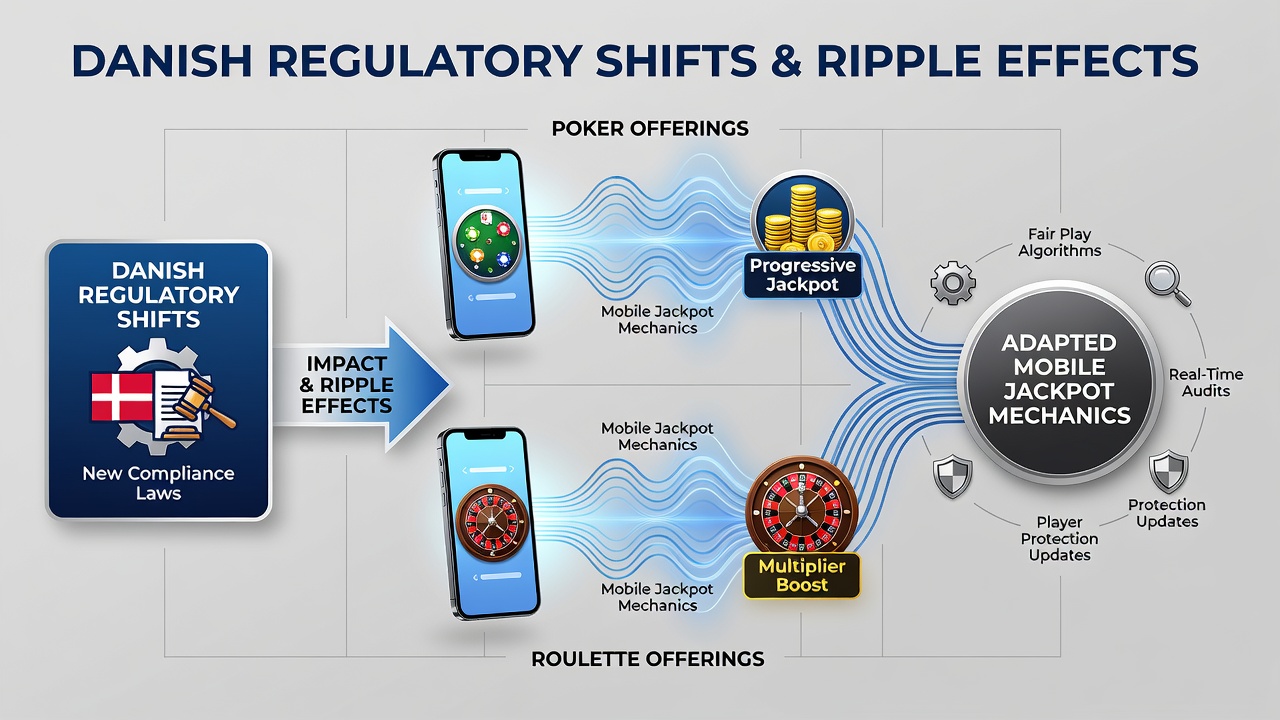
Danish Regulatory Shifts and Their Ripple Effects on Mobile Jackpot Mechanics Across Poker and Roulette Offerings
Denmark's gambling market has undergone several adjustments in recent years as the Danish Gambling Authority refines its oversight of online platforms. These changes focus on licensing conditions, player protection measures, and technical standards for game mechanics, including those that govern jackpot accumulation and distribution in poker and roulette environments. Observers note that mobile-specific implementations often require additional scrutiny because of the way real-time data transmission and session management differ from desktop versions.
Background on Danish Gambling Oversight
The Danish Gambling Authority maintains a centralized licensing system that applies uniform rules across all approved operators. Recent updates have emphasized clearer documentation of random number generators and jackpot seeding processes, particularly when games run on mobile networks with variable latency. Data from the authority shows that mobile traffic now accounts for a substantial share of total wagers, prompting regulators to examine how jackpot pools update during interrupted connections or across different device types. A report issued by the European Commission on cross-border gambling data highlights similar patterns in other EU member states, where mobile usage has driven revisions to payout verification protocols.
Mechanics of Mobile Jackpots in Poker and Roulette
Jackpot systems in online poker typically rely on contributions from multiple tables or tournaments, while roulette variants often feature progressive elements tied to specific betting patterns such as straight-up numbers or color combinations. On mobile devices these mechanics must accommodate smaller screen real estate and touch-based interfaces without altering the underlying probability structures. Technical specifications issued by Danish authorities require that jackpot meters refresh at consistent intervals regardless of network conditions, and that any displayed values match the backend ledger at the moment a player places a qualifying bet. Studies from the University of Sydney's gambling research unit indicate that discrepancies in mobile display timing have prompted several operators to redesign their synchronization layers to meet stricter audit trails.
Regulatory Adjustments Taking Effect in 2026
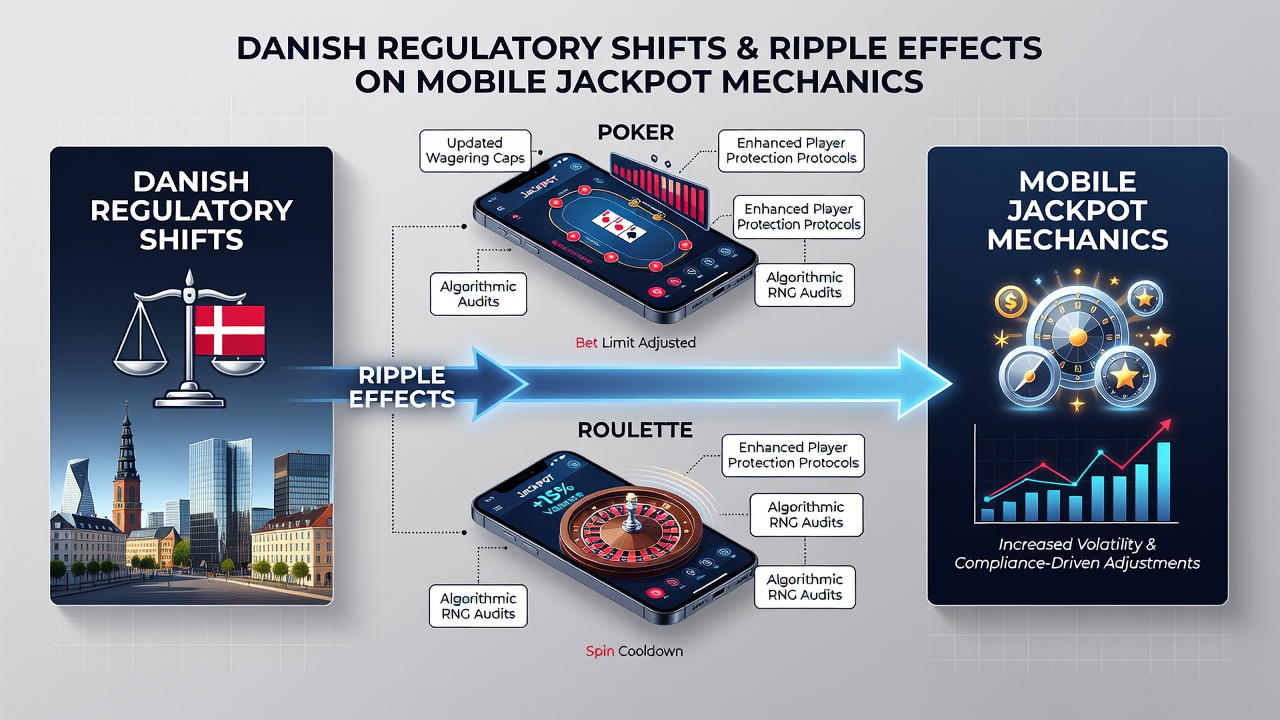
Beginning in July 2026, new transparency requirements will mandate that operators submit detailed logs of jackpot seed values and contribution percentages for all mobile sessions. These rules extend to both poker and roulette offerings, requiring separate reporting streams when the same jackpot pool services multiple game types. The Danish Gambling Authority has indicated that non-compliance could result in temporary suspension of jackpot features rather than full license revocation, a distinction that encourages incremental technical fixes. Figures released by the authority reveal that mobile jackpot disputes have declined steadily since earlier audit requirements were introduced, yet regulators continue to monitor edge cases involving multi-device play and rapid session switching.
Effects on Poker Offerings
Poker platforms licensed in Denmark have adjusted their mobile applications to isolate jackpot contributions from individual table stakes during periods of network instability. This separation ensures that a dropped connection does not retroactively alter the accumulated pool visible to other participants. Operators have also introduced confirmation prompts on mobile interfaces before any portion of a jackpot is awarded, aligning with broader responsible gambling guidelines. Research published in the Journal of Gambling Issues notes that such interface changes have reduced the frequency of player complaints related to perceived jackpot timing errors, although the underlying contribution formulas remain unchanged.
Effects on Roulette Offerings
Roulette games present distinct challenges because progressive jackpots often activate only on rare outcomes such as specific number sequences or wheel sectors. Mobile implementations must therefore handle rapid spin cycles while maintaining accurate jackpot tracking across concurrent sessions. Updated Danish rules require that any mobile roulette variant displaying a shared jackpot clearly indicate whether the pool is accessible exclusively through mobile play or whether it aggregates bets from all device types. This distinction affects how operators allocate seed funding and how they communicate eligibility criteria to users. Evidence from compliance audits shows that clearer labeling has helped align player expectations with actual payout conditions.
Cross-Border and Technical Considerations
Because Danish licenses permit certain international partnerships, operators must reconcile local jackpot rules with frameworks used in other jurisdictions. Technical teams frequently employ modular code structures that allow regional parameters to override default settings without rewriting core game engines. A review conducted by the Canadian Centre for Gaming Research found that jurisdictions with centralized reporting systems experience fewer synchronization conflicts when mobile traffic crosses borders. Danish operators have adopted similar modular approaches to accommodate the July 2026 reporting mandates while preserving compatibility with existing poker and roulette libraries.
Conclusion
The regulatory developments scheduled for July 2026 build upon earlier Danish efforts to standardize jackpot handling across mobile platforms. By requiring detailed logging and device-agnostic display standards, the Danish Gambling Authority continues to shape how poker and roulette jackpots operate in practice. These measures affect operators, software providers, and players through incremental technical and procedural adjustments rather than wholesale redesigns of game mathematics. Ongoing monitoring by the authority and parallel analyses from international research bodies will determine whether further refinements become necessary as mobile usage patterns evolve.